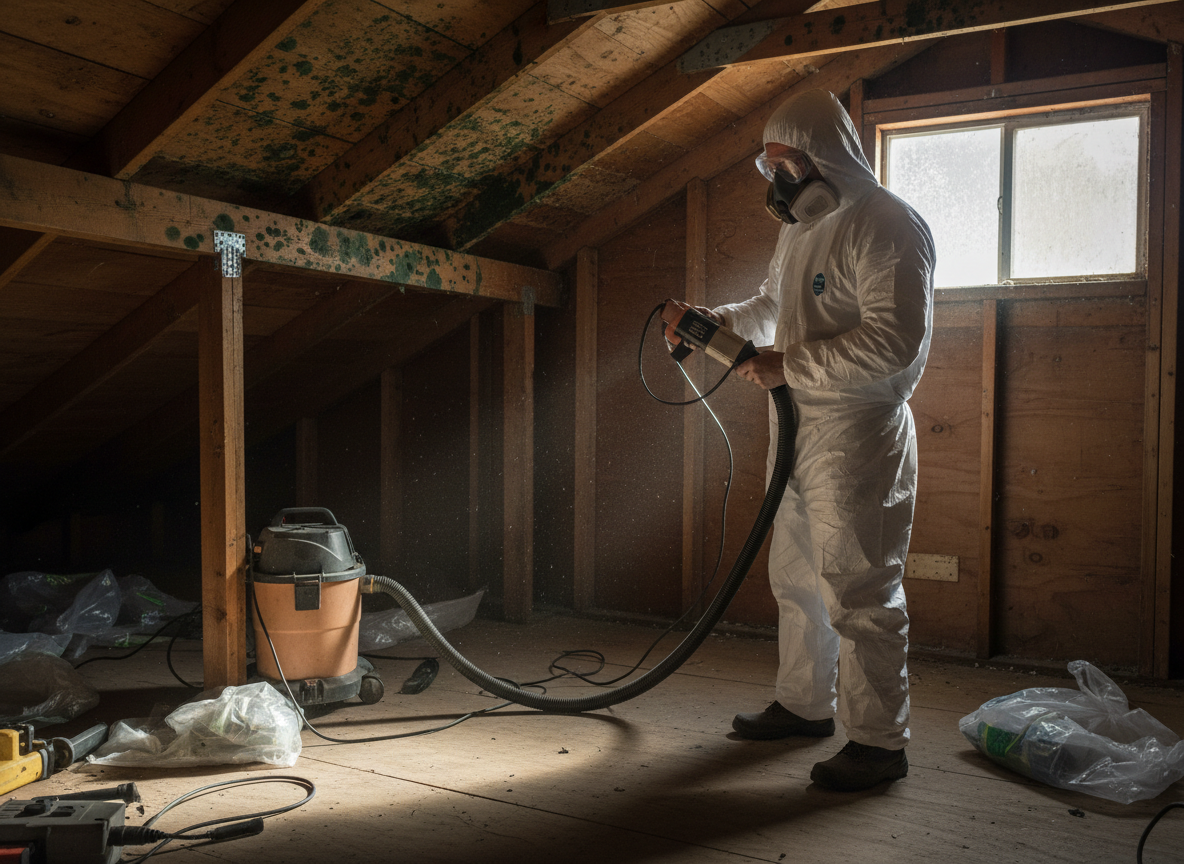
In Thousand Palms homes, attics often trap moisture from evaporative coolers and central AC units that run hard against the hot desert climate. We start with moisture mapping and air sampling to locate growth behind insulation or along roof decking before any removal begins. Older tract homes near the Coachella Valley Preserve frequently have single-layer roof vents that allow blowing sand and occasional monsoon rain to enter, creating edge cases where mold spreads along rafters without visible ceiling stains below.
Testing follows EPA guidelines for spore counts and includes surface swabs when growth is visible on OSB sheathing. Removal requires HEPA containment and negative air machines to keep spores from migrating into living spaces, especially important in Riverside County where wind can carry particles across neighboring yards in Palm Desert. We remove affected insulation, treat wood with EPA-registered antimicrobials, and verify clearance with post-remediation sampling before reinstalling new material.
Homeowners often overlook bathroom exhaust fans venting directly into the attic, a common setup in 1970s-1990s builds throughout Thousand Palms that keeps relative humidity elevated even when outdoor air is dry. We seal those penetrations during remediation and advise on proper ridge vent upgrades to reduce recurrence in the extreme summer heat.
Technician insight
In Thousand Palms, the thing that catches most people out with Attic mold testing and removal is bathroom exhaust fans dumping moist air straight into the attic. With our 110-degree summers the AC runs nonstop, so that humidity has nowhere to go and condenses on the cooler roof deck at night. One vent fan left uncorrected can restart growth within months even after we clean everything else.
Hidden Growth Above Master Bedroom
A homeowner in Thousand Palms noticed musty smells but no ceiling stains. Inspection found bathroom fan venting into the attic and elevated humidity from constant AC use. We contained the space, removed wet insulation along the east rafters, treated the sheathing, and rerouted the fan. Clearance samples passed and the odor disappeared.
How it works
- 1
Initial Inspection
We arrive within hours, use moisture meters and borescopes to check insulation, rafters, and HVAC returns in the attic space.
- 2
Testing and Containment
Air and surface samples are collected, then the work area is sealed with plastic sheeting and negative air established before any disturbance.
- 3
Removal and Treatment
Contaminated materials are bagged and removed, wood surfaces cleaned and treated, and sources of moisture such as vent leaks addressed.
- 4
Clearance and Restoration
Post-testing confirms safe spore levels, then new insulation is installed and the attic is returned to normal use.
Pricing
Cost depends on attic size, depth of insulation removal needed, and whether HVAC components require separate cleaning.