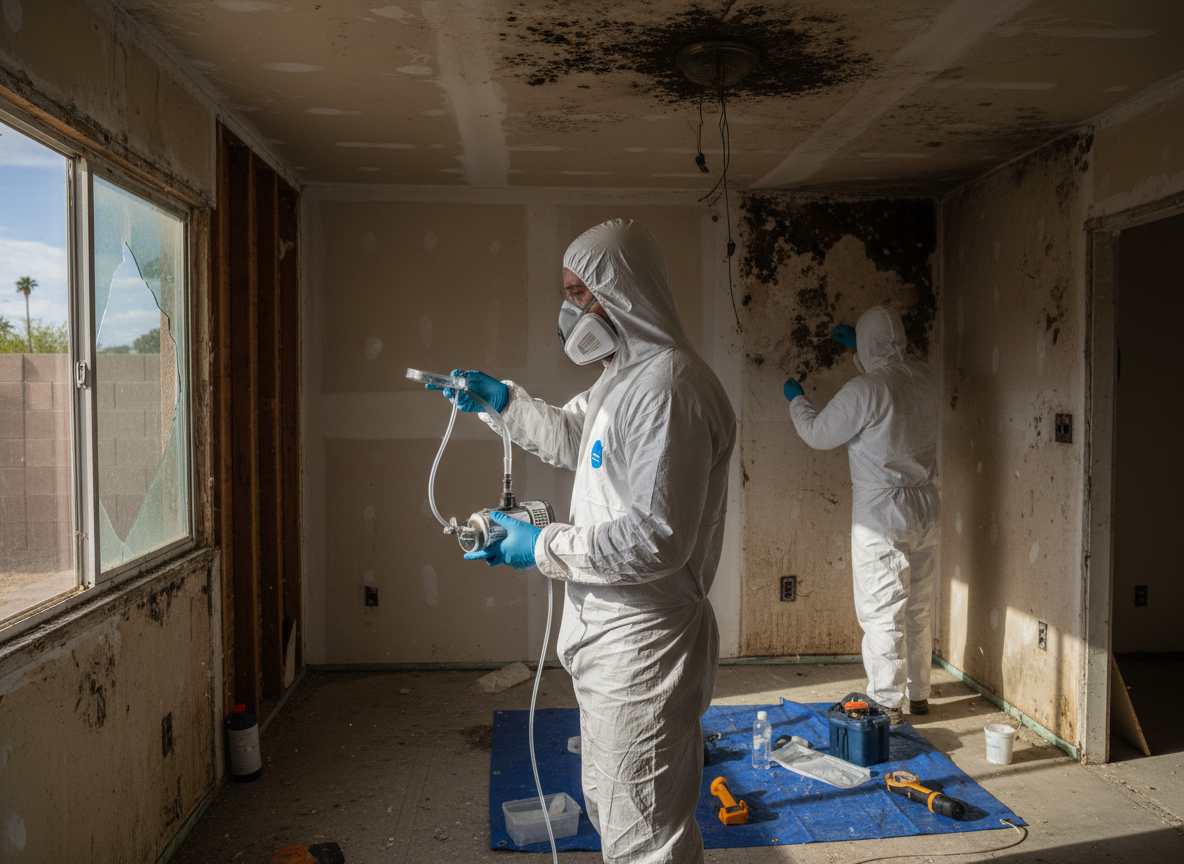
In the hot desert climate of Thousand Palms and surrounding Riverside County neighborhoods, mold testing focuses on air conditioning systems and irrigation leaks that create hidden moisture pockets. Older single-family homes built before 1990 often have crawl spaces and attic insulation that trap condensation from evaporative coolers, allowing black mold and aspergillus to develop behind walls. Testing protocols include spore trap air samples, tape lifts, and moisture meter readings at multiple points to map affected zones without unnecessary demolition.
Properties near the Coachella Valley Preserve face additional risks from seasonal monsoon rains that overwhelm poorly graded lots and stucco exteriors common in Palm Desert and Thousand Palms. Edge cases include false negatives from recent HVAC filter changes or homeowners using portable dehumidifiers that mask elevated humidity levels. All samples are sent to accredited labs for genus-level identification, and reports include remediation scope recommendations that comply with Riverside County building standards for ventilation and moisture control.
Testing is performed with calibrated equipment to distinguish between normal desert spore counts and active amplification sites. Homeowners receive a written report detailing sample locations, lab results, and recommended next steps within 48 hours. This service is especially useful before real estate transactions or after plumbing repairs in homes along Country Club Drive and adjacent streets.
Technician insight
In Thousand Palms, the thing that catches most people out with Mold Testing is assuming the dry climate means no mold risk. Irrigation leaks along the edge of the Coachella Valley Preserve and constant AC condensation in pre-1990 stucco homes create perfect pockets behind walls that only show up on proper air sampling and moisture mapping.
Hidden Attic Growth After Cooler Failure
A Thousand Palms homeowner noticed musty odors after an evaporative cooler leak but saw no visible mold. Testing revealed elevated aspergillus spores in the attic insulation above the master bedroom. We mapped the moisture, identified the failed pan, and provided a targeted remediation plan that avoided full ceiling removal.
How it works
- 1
Initial Assessment
Review property history, visible moisture sources, and HVAC layout in Thousand Palms homes.
- 2
Sampling
Collect air, surface, and bulk samples from suspected areas including attics and crawl spaces.
- 3
Moisture Mapping
Use meters and infrared tools to locate hidden water intrusion behind stucco and drywall.
- 4
Lab Analysis
Send samples for identification and provide a detailed report with remediation guidance.
Pricing
Cost depends on square footage, number of samples, and access difficulty in desert homes; quotes provided after initial assessment.