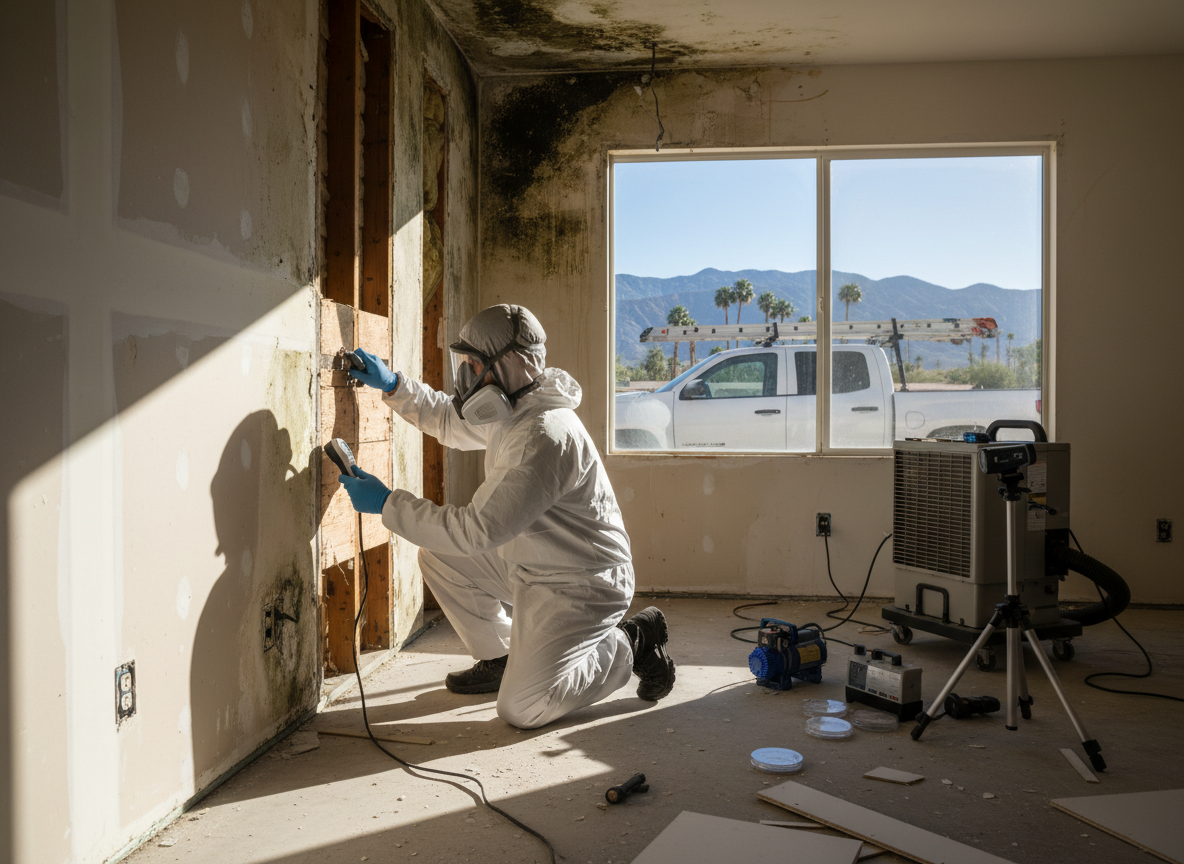
Mold inspection in Thousand Palms homes starts with checking the HVAC systems that run constantly in the hot desert climate. Condensation inside ducts and around evaporator coils often creates hidden growth that spreads through the house. We also examine irrigation lines near foundations because even small leaks in the dry soil of Riverside County can push moisture into stucco and slab edges. Older tract homes near the Coachella Valley Preserve frequently have roof penetrations and poor attic ventilation that trap humidity after rare rain events.
Inspectors look for discoloration on drywall behind appliances and in bathrooms where evaporative coolers were once common. We use moisture meters on concrete slabs because the alkaline desert soil can mask active water intrusion. Edge cases include mold growing inside wall cavities after monsoonal storms push water under stucco weep holes. Every inspection includes checking the garage and laundry areas where dryer vents terminate too close to the structure in Palm Desert and Thousand Palms neighborhoods.
We document visible growth and moisture readings without opening walls unless moisture is confirmed. Reports note locations, types of materials affected, and recommended next steps for remediation. Homeowners receive guidance on preventing recurrence by addressing the actual water source rather than just cleaning surfaces. Inspections cover both single-story ranch homes and the few two-story properties found along Country Club Drive.
Seasonal Guidance
Hot summer months increase AC runtime and condensation risk inside ducts. Winter brings occasional storms that test roof flashings and window seals around the preserve. Spring irrigation startup often reveals cracked lines that homeowners miss until mold appears indoors.
Technician insight
In Thousand Palms the thing that catches most people out with Mold Inspection is irrigation leaks along the side yards. The desert soil dries so fast that homeowners never notice the water until it reaches the slab edge and mold shows up inside the wall near the AC closet.
Hidden Slab Edge Moisture
A homeowner in Thousand Palms noticed a musty smell near the laundry room after an unusually wet winter. We found elevated moisture along the east foundation wall caused by a cracked irrigation line that had been running under the stucco for months. The inspection mapped the affected drywall and confirmed no active growth inside the wall cavity yet. We advised shutting off the line and drying the area before any remediation was needed.
How it works
- 1
Initial Assessment
Review property history and visible moisture concerns with the owner over the phone or on site.
- 2
Visual and Meter Inspection
Walk through all accessible areas including attic, crawl space if present, HVAC, and exterior grading around the foundation.
- 3
Moisture Mapping
Take readings on walls, floors, and ceilings to locate active water sources in the dry desert climate.
- 4
Report and Recommendations
Provide written findings with photos and clear next steps for any confirmed mold or moisture issues.
Pricing
Pricing depends on square footage, number of stories, and whether HVAC or attic access is required.