Bathroom mold in Thousand Palms often stems from constant air conditioning use in the hot desert climate pulling moisture onto cooler tile and drywall surfaces. Homes from the 1970s through 1990s in neighborhoods around Thousand Palms commonly feature single-pane windows and minimal exhaust fan capacity, allowing condensation to collect behind shower surrounds and under vanities. Technicians inspect for hidden growth along baseboards and in wall cavities where irrigation runoff from nearby properties meets the alkaline soil typical of Riverside County.
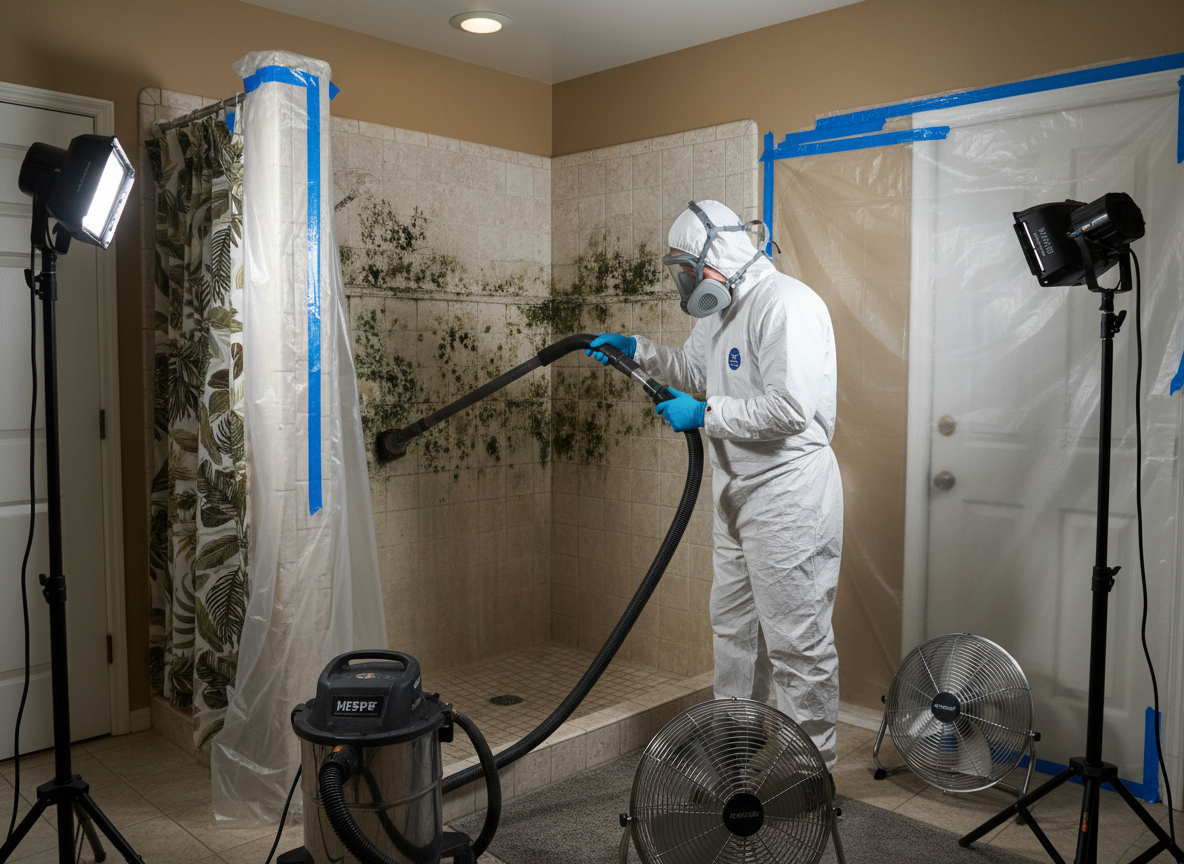
Removal starts with isolating the space and using negative air machines to prevent spores from drifting into adjacent rooms. Affected drywall, grout, and caulk are cut out rather than simply bleached, because desert heat can drive moisture deeper into porous materials. After antimicrobial application, crews reinstall with moisture-resistant backer board and recommend upgraded ventilation fans rated for continuous use to match the dry but mechanically cooled conditions common here.
Edge cases include mold migrating from bathrooms into adjacent closets when sliding doors trap humidity or when roof leaks near the Coachella Valley Preserve allow monsoon rainwater to enter wall planes. Code requirements in Riverside County call for proper permitting when structural elements are disturbed, and crews document moisture readings before and after to confirm the source has been addressed rather than masked.
Technician insight
In Thousand Palms, the thing that catches most people out with bathroom mold removal service is how the constant AC running in our hot desert climate pushes condensation deep behind tile in 1980s tract homes, especially where the slab meets the shower curb and irrigation water from neighboring yards keeps the soil damp year-round.
Hidden Mold Behind Shower in Thousand Palms Bathroom
A homeowner in a 1984 Thousand Palms house near the Coachella Valley Preserve reported musty smell after running the AC nonstop through summer. Inspection revealed moisture trapped behind the original fiberglass shower pan where the desert temperature swing caused repeated condensation. Crews removed the lower three feet of drywall, treated the framing, replaced with cement board, and added a higher-CFM exhaust fan. Follow-up readings showed the wall stayed dry through the next monsoon season.
How it works
- 1
Initial Inspection
Technician examines all bathroom surfaces, checks adjacent rooms, and uses moisture meters to map hidden water in walls and under flooring.
- 2
Containment Setup
Plastic barriers and negative air machines isolate the work area to keep spores from spreading through the home's HVAC system.
- 3
Removal and Treatment
Damaged materials are removed, surfaces are cleaned with EPA-registered antimicrobials, and the source of moisture is corrected where possible.
- 4
Drying and Verification
Industrial dehumidifiers and air movers dry the space, followed by post-remediation moisture checks and clearance testing.
Pricing
Pricing depends on square footage affected and whether hidden wall or subfloor damage is discovered during inspection; upfront quotes provided on site.