Thousand Palms sits in the Coachella Valley where daytime heat routinely exceeds 100 degrees, driving constant air conditioner use. Condensation lines and drip pans inside older single-story homes often leak into wall cavities or under-slab areas that stay hidden until odors appear. Because many houses date to the 1970s and 1980s, original ductwork and insulation trap moisture against stucco and slab foundations common in the neighborhood.
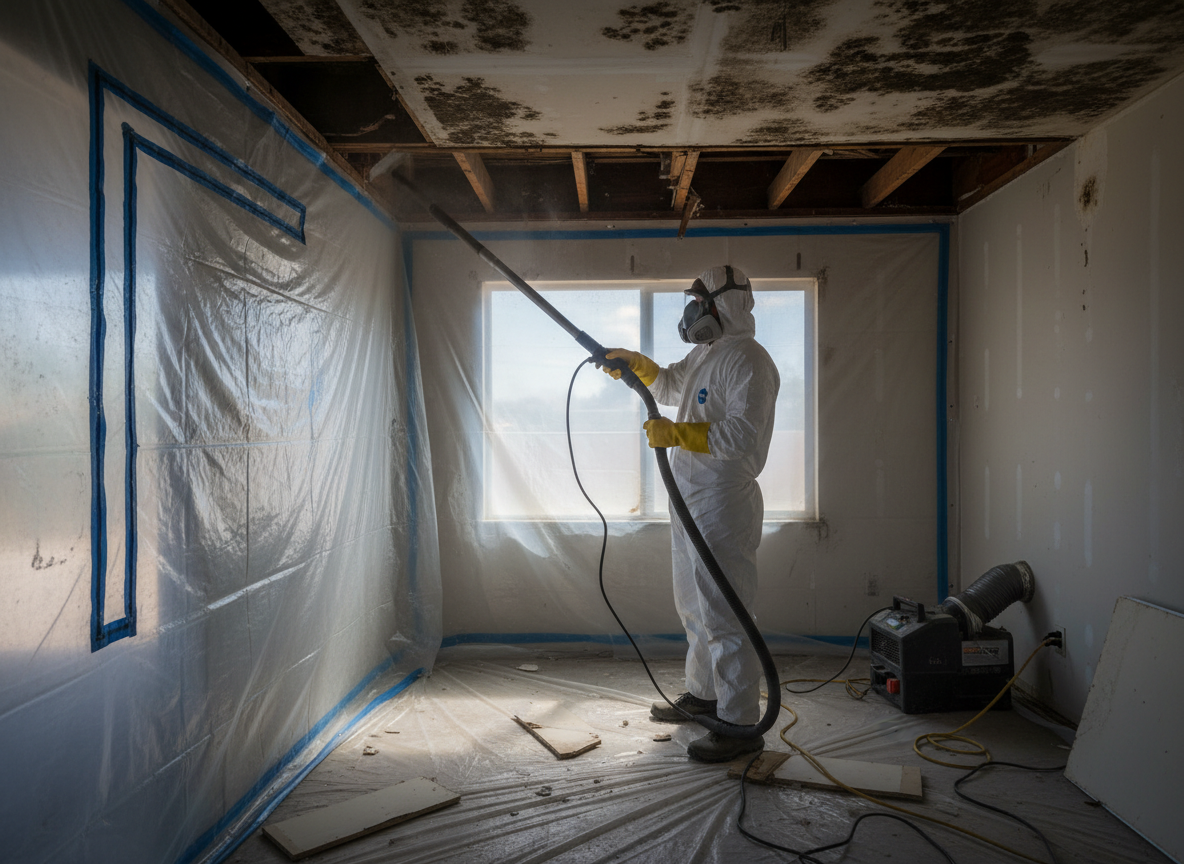
Flash irrigation from yards bordering the Coachella Valley Preserve can push water under perimeter footings during summer watering cycles. Once inside, the low desert humidity outside actually masks the problem indoors until black staining shows on baseboards or carpet padding. Abatement crews must pull back drywall at least 18 inches past visible growth and run negative air machines long enough to drop moisture readings below 15 percent on both wood and drywall.
Riverside County code requires proper disposal of contaminated materials at approved landfills rather than general construction debris routes. After removal, we install temporary dehumidification sized for the square footage and verify with third-party moisture meters before any reconstruction. Homeowners along Country Club Drive and nearby streets often discover the same issue repeats in laundry rooms where washer hoses connect to older galvanized lines.
Technician insight
In Thousand Palms the thing that catches most people out with mold abatement is irrigation overspray from yards near the Coachella Valley Preserve soaking the exterior stucco base on 1970s ranch homes, then wicking up behind baseboards where the slab meets the wall.
Hidden Growth Behind Laundry Wall
A homeowner in Thousand Palms noticed a musty smell near the laundry room after an unusually hot July. We found an old washer hose leaking behind the drywall and into the slab edge. Containment was set, wet drywall and insulation removed, and the cavity dried for 72 hours before new materials were installed.
How it works
- 1
Initial Assessment
Technician inspects all accessible areas including attics, crawl spaces, and HVAC returns using moisture meters and borescopes.
- 2
Containment Setup
Plastic barriers and negative air machines isolate the work zone to prevent spores from migrating to unaffected rooms.
- 3
Material Removal
Affected drywall, insulation, and trim are cut out and bagged for proper disposal at Riverside County facilities.
- 4
Drying and Verification
Commercial dehumidifiers and air movers run until readings reach safe levels, followed by clearance testing.
Pricing
Upfront quotes issued after on-site assessment; final cost depends on square footage, access, and whether HVAC components require cleaning.