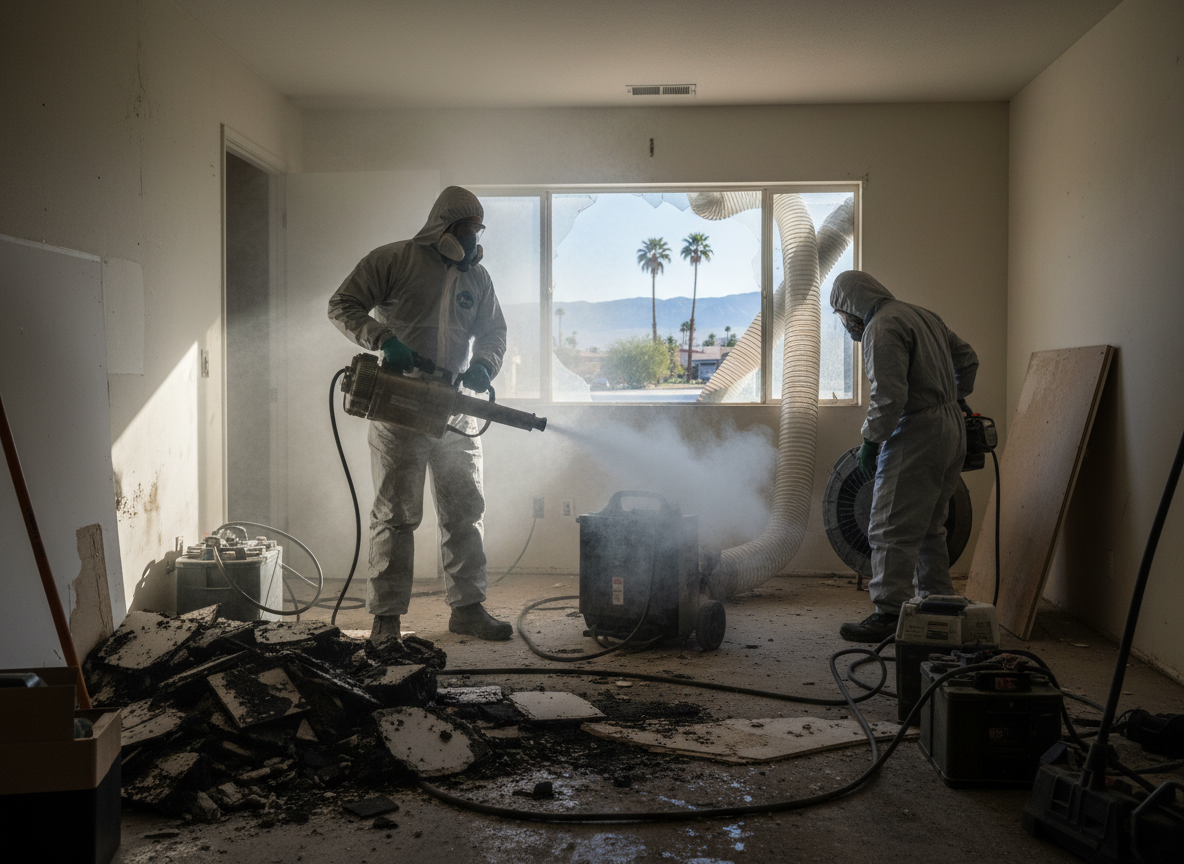
In Thousand Palms homes built on the sandy soils near the Coachella Valley Preserve, mold odors often linger after leaks because stucco walls and slab foundations trap moisture from irrigation or AC condensate. Standard bleach wipes fail here since the source sits behind drywall or under tile in the hot desert climate that forces year-round cooling. We use negative air machines and HEPA filtration to capture spores without spreading them into the dry air that already stresses HVAC systems across Riverside County.
Edge cases appear when odors migrate through shared walls in Palm Desert condos or older ranch homes where roof penetrations around swamp coolers allow water to travel along trusses. Removing the smell requires cutting access panels, applying antimicrobial agents rated for porous materials, and running hydroxyl generators for days rather than hours. Homeowners who skip containment see the odor return when temperatures spike and pull remaining moisture back into living spaces.
Code notes matter because Riverside County requires proper disposal of contaminated porous materials and documentation of moisture readings before final clearance. We log pre- and post-remediation humidity levels at multiple points in the structure to confirm the desert air won't reintroduce conditions that support regrowth. Skipping these steps leaves residents with recurring smells that real estate disclosures later flag during sales near Thousand Palms.
Warning signs specific to this area include musty smells strongest near return vents or baseboards after monsoon rains, even though annual rainfall stays low. These indicate condensation inside wall cavities from temperature swings between hot days and cooler nights. Addressing only the visible surface lets the odor persist until the full cavity is dried and treated.
Technician insight
In Thousand Palms, the thing that catches most people out with odor removal mold is how constant AC use in our hot desert climate pushes condensate into stucco wall cavities that never fully dry between the rare rains, especially in homes built on the sandy ground near the Coachella Valley Preserve.
Hidden Odor Behind Bedroom Wall
A homeowner in Thousand Palms noticed a musty smell strongest near the AC return after a brief monsoon. We found elevated moisture in the exterior wall from roof flashing failure above a swamp cooler. After removing saturated drywall and insulation, treating the cavity, and running hydroxyl units for three days, humidity dropped and the odor disappeared.
How it works
- 1
Initial Assessment
We inspect affected rooms, check humidity behind walls, and map odor sources using moisture meters and thermal imaging.
- 2
Containment Setup
Plastic barriers and negative air pressure isolate the work zone so spores do not drift into clean areas of the home.
- 3
Source Removal
We cut out saturated materials, apply antimicrobial treatments, and clean remaining surfaces with HEPA vacuums.
- 4
Odor Neutralization
Hydroxyl generators and air scrubbers run until readings confirm the smell is eliminated and humidity is controlled.
- 5
Final Clearance
Post-treatment testing verifies no residual moisture or odors remain before barriers come down.
Pricing
Pricing depends on the size of the affected area, depth of hidden moisture, and number of rooms requiring containment.