Thousand Palms sits in the Coachella Valley where daily highs often exceed 100 degrees and irrigation from nearby golf courses and the Coachella Valley Preserve keeps soil moisture higher than the surrounding desert would suggest. This combination drives condensation inside wall cavities and attic spaces once evening temperatures drop. Older single-story ranch homes built in the 1970s and 1980s commonly have uninsulated stucco exteriors that allow temperature swings to pull moisture through small roof penetrations around swamp coolers and HVAC lines. When we open these walls we frequently find mold growing on the back side of drywall rather than on visible surfaces.
Riverside County building practices from that era left many homes with minimal vapor barriers and ductwork routed through unconditioned attics. Once a small leak develops, the dry desert air rapidly evaporates surface water while trapping humidity inside wall assemblies. Homeowners often notice musty odors only after running the air conditioner for several weeks in late spring. Removing visible growth without addressing the hidden moisture behind the stucco leads to rapid recurrence within one monsoon season. We map moisture with thermal imaging before any demolition to avoid chasing symptoms instead of the actual water source.
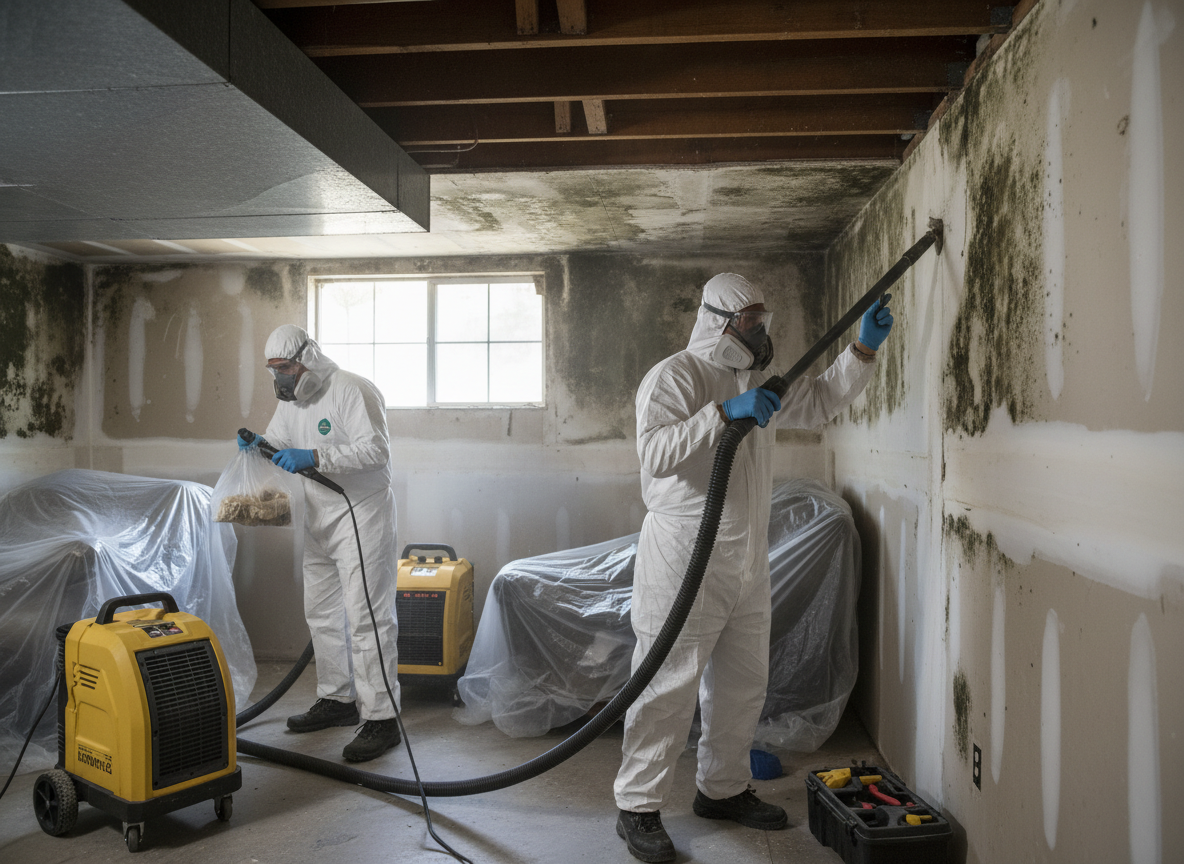
Work in these neighborhoods requires strict containment because the constant wind that blows through the valley can carry spores across neighboring properties near the preserve. We seal off HVAC returns first, then use negative air machines exhausted through HEPA filtration. After removal we treat cellulose insulation and wood framing with antimicrobial solutions that withstand the repeated wetting and drying cycles typical here. Final clearance testing is performed before any new drywall is hung so residents know the source has been eliminated rather than masked.
Technician insight
In Thousand Palms, the thing that catches most people out with professional mold removal is how quickly irrigation water from the preserve side of the valley migrates under slab foundations and then evaporates upward into wall cavities once the desert heat hits. Homeowners see a small spot near the baseboard and assume it is surface only, but the real growth is often two feet up inside the stucco because the daily temperature swing pulls moisture that far before it dries again.
Hidden Growth Behind Stucco in a 1982 Ranch Home
A homeowner near the Coachella Valley Preserve noticed a musty smell only after running the AC daily. We found elevated moisture readings along the north wall where irrigation overspray had wicked under the slab. Removal revealed mold on the back of drywall and on the bottom plate extending eighteen inches upward. After containment, material removal, and targeted drying we restored the wall and confirmed clearance; the odor did not return the following summer.
How it works
- 1
Initial Assessment
We arrive within hours, document visible growth, use moisture meters on stucco and drywall, and identify HVAC or irrigation sources contributing to the problem.
- 2
Containment Setup
Plastic barriers and negative air machines isolate the affected rooms so spores do not spread through the home or into neighboring yards common in Thousand Palms subdivisions.
- 3
Removal and Cleaning
We remove affected materials, HEPA vacuum surfaces, and apply treatments suited to the dry climate that allow repeated condensation events without regrowth.
- 4
Drying and Verification
Dehumidifiers run until readings match desert norms, followed by independent air sampling before any reconstruction begins.
Pricing
Cost depends on square footage affected, depth of hidden growth behind stucco, and whether HVAC ducts require cleaning; we provide upfront written quotes after inspection.