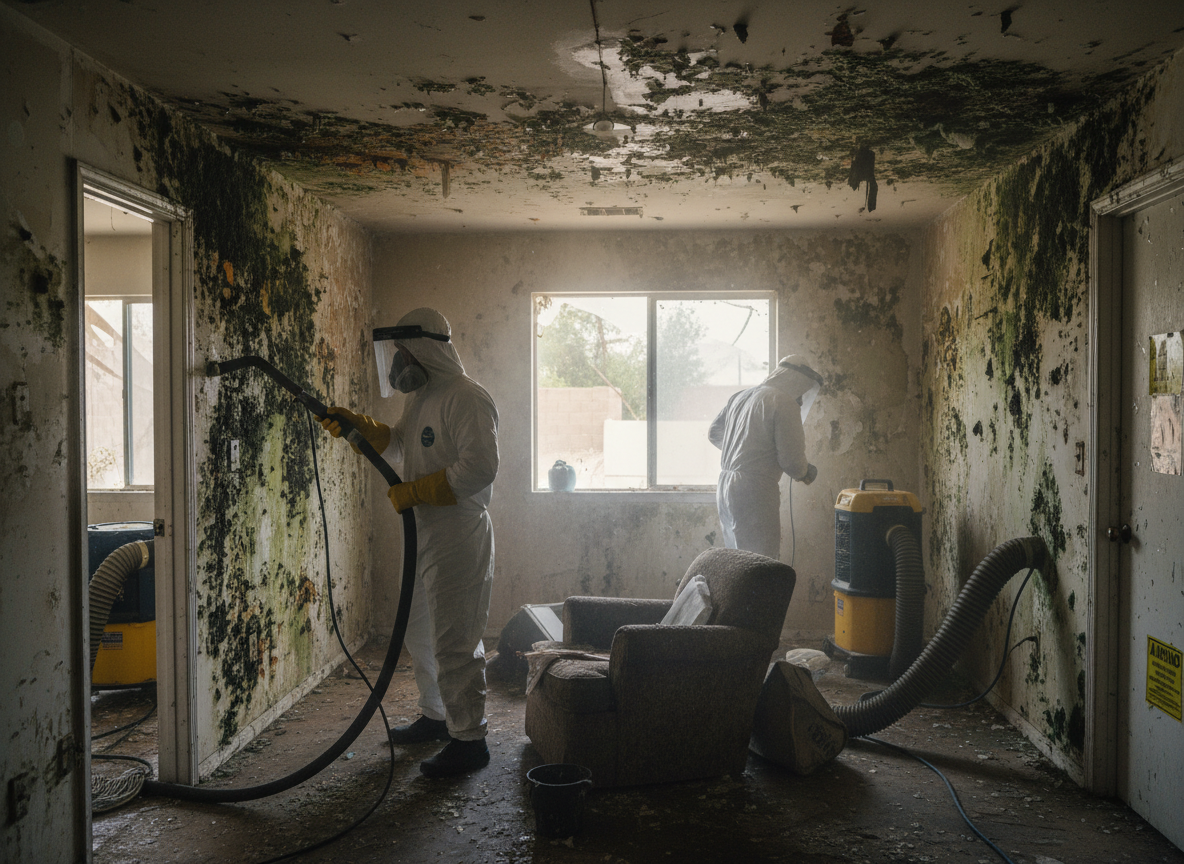
Thousand Palms sits in a hot desert climate where sudden monsoon rains and persistent AC condensation create hidden moisture pockets behind stucco and in attic insulation. Older tract homes near the Coachella Valley Preserve often have single-pane windows and minimal vapor barriers, allowing humidity spikes to feed black mold colonies inside wall cavities. Our crews focus on negative-air containment and HEPA filtration to keep spores from drifting into the dry desert air outside.
Riverside County building practices from the 1980s and 1990s left many properties with unsealed HVAC ducts routed through crawl spaces that sit close to alkaline soil. When rare flooding occurs along wash areas near Thousand Palms, water migrates under slabs and feeds mold on subfloor sheathing. We cut and remove affected materials rather than fogging, then dry the structure with commercial dehumidifiers sized for desert heat loads before any reconstruction begins.
Toxic mold removal here requires extra attention to roof penetrations around swamp coolers, which are still common in Palm Desert and Thousand Palms neighborhoods. Condensation from these units often drips into ceiling joists, creating circular growth patterns that homeowners mistake for simple water stains. We map moisture with thermal imaging and pull samples for lab confirmation before any demolition to avoid unnecessary structural repairs.
Technician insight
In Thousand Palms, the thing that catches most people out with toxic mold removal is how the intense desert heat pulls moisture from even small leaks deep into stucco and insulation before anyone notices. Homeowners often paint over spots near AC units or swamp coolers, thinking the dry air will handle it, but that just traps the problem until monsoon season restarts growth inside the walls.
Hidden Growth After Monsoon Leak
A Thousand Palms homeowner noticed musty odors near a bedroom AC vent following a rare summer storm. We found water had entered through a roof penetration and wicked into cellulose insulation over several weeks. Containment was set, affected materials removed, and the cavity dried before any new insulation was installed, eliminating the odor and preventing recurrence during the next heat wave.
How it works
- 1
Initial Assessment
We arrive within hours, inspect affected rooms, and use moisture meters plus thermal cameras to locate hidden growth behind walls and ceilings in Thousand Palms homes.
- 2
Containment Setup
Plastic barriers and negative-air machines isolate the work zone so spores do not spread through the dry desert air into unaffected areas of the property.
- 3
Removal and Disposal
Contaminated drywall, insulation, and trim are cut out and bagged for proper disposal while HEPA vacuums capture remaining particles.
- 4
Drying and Clearance
Commercial dehumidifiers and air movers dry the structure, followed by post-remediation testing to confirm safe spore levels before any rebuilding.
Pricing
Upfront quotes provided after inspection; final cost depends on square footage affected and access to hidden cavities.